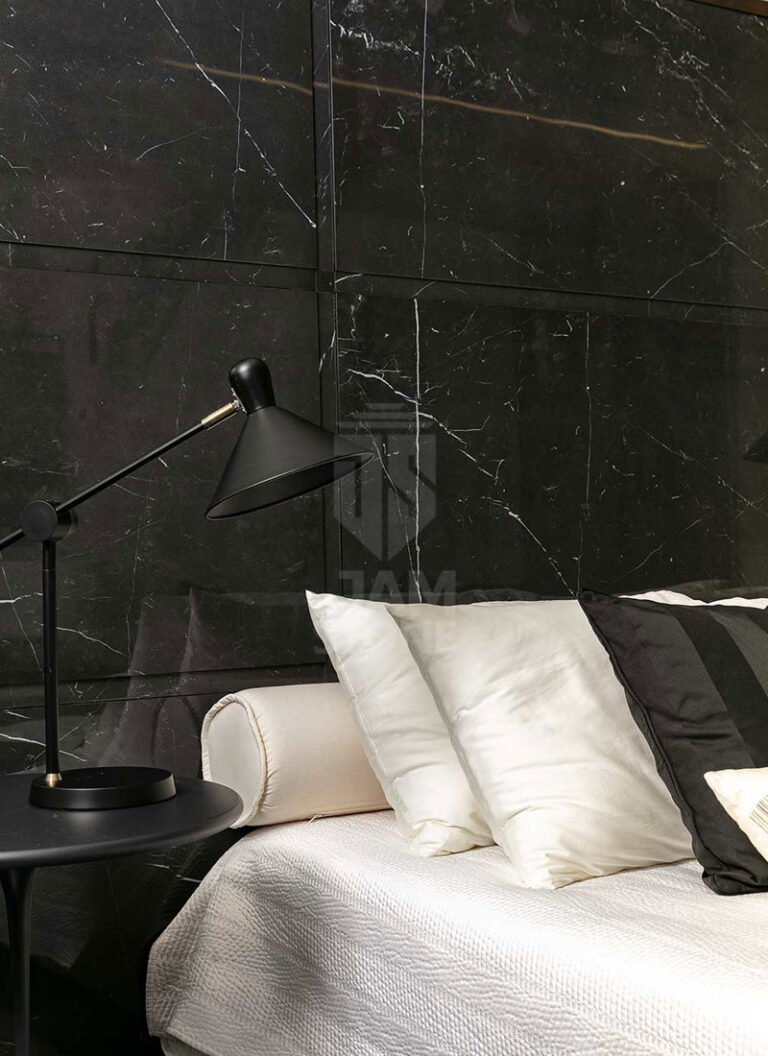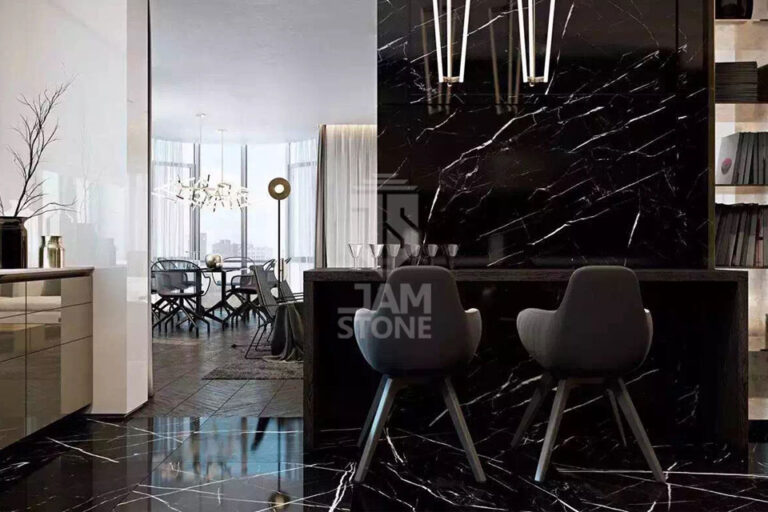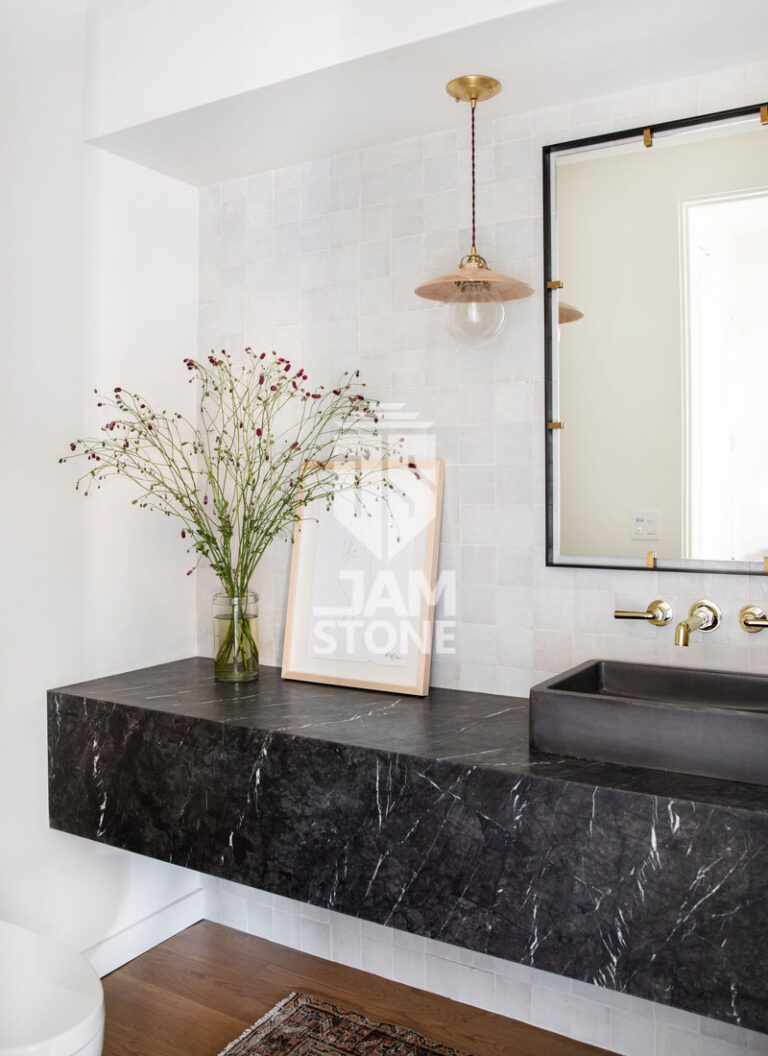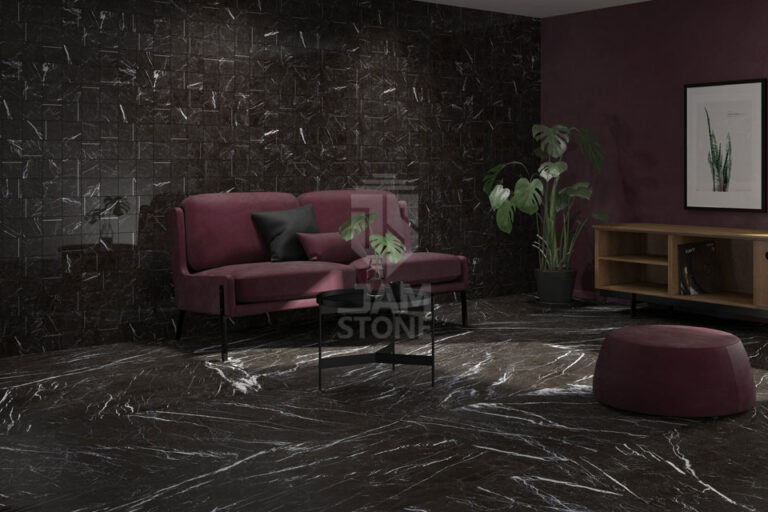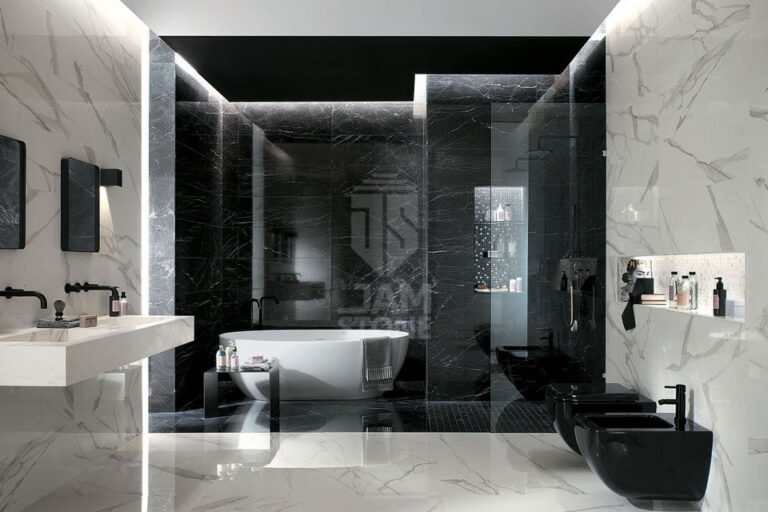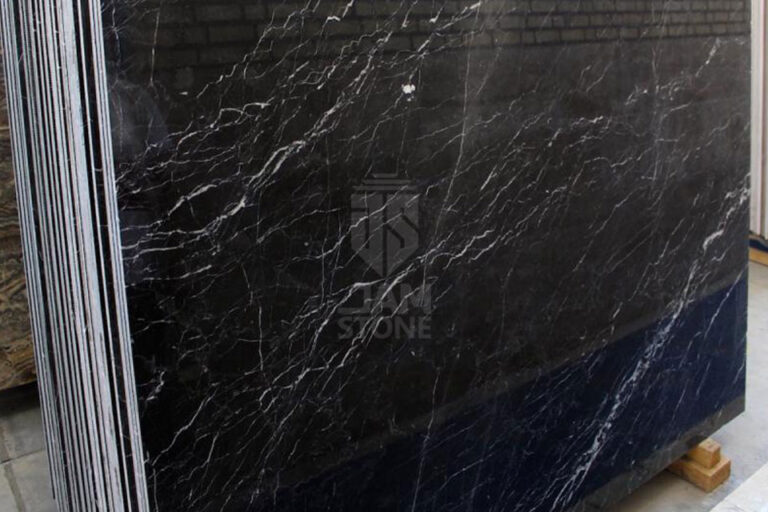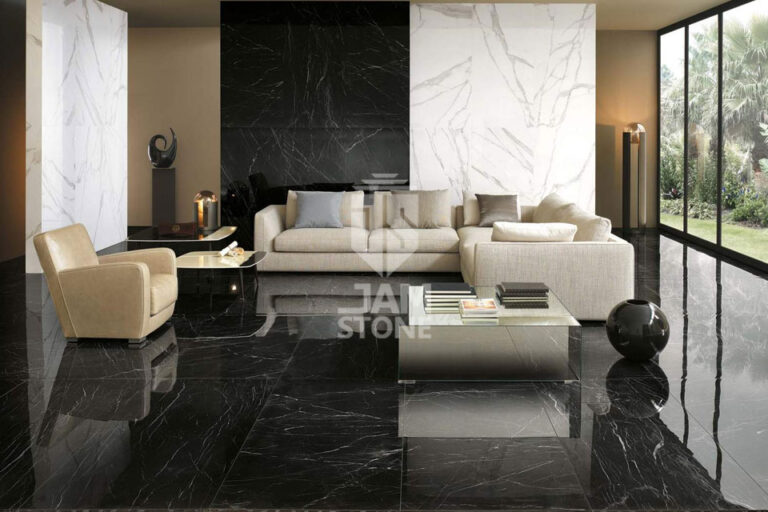

Jam Nero Marquina Marble offers a deep black background with crisp white veins that create clean contrast in calm, modern spaces. Designers choose it for feature walls, bathroom settings, reception desks, and floors where a clear visual statement is needed. The stone is a calcitic marble, so it can achieve a bright, reflective polish when resin-treated at the factory and well finished. In this article, you will find practical facts about composition, finishes, common sizes, and care.
Reliable supply directly changes project risk in a measurable way, and that is where JAM Stone Co. adds value. The company builds consistency through careful block selection, in-house processing, and multi-step quality checks. They align slab maps with drawings so cutting plans respect vein flow and the intended look. The team supports both standard modules and complex cut-to-size packages and coordinates packing, crate labels, and shipment photos. With clear technical notes and responsive service, they help reduce lead-time issues and installation rework while keeping documentation tidy for site handover.
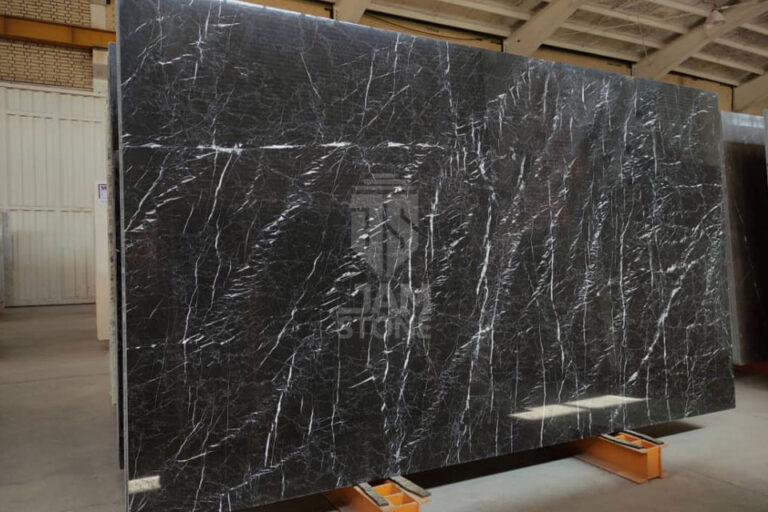
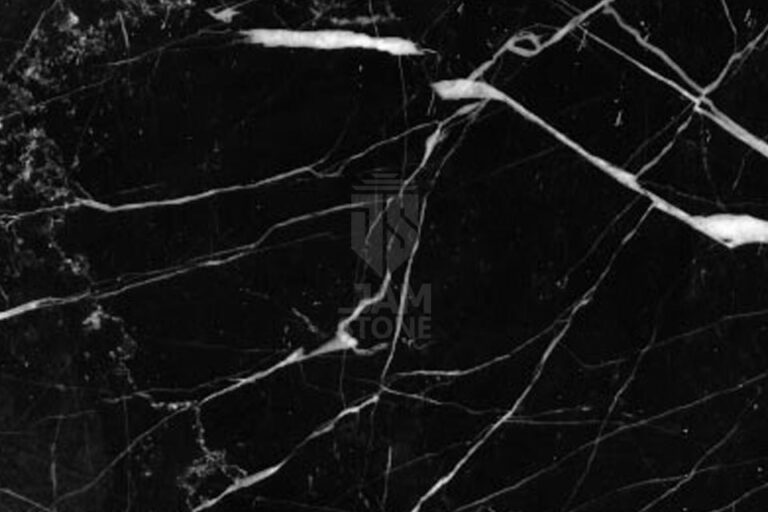
Jam Nero Marquina Marble (also known as Pars Black Marble) is a black, calcite-rich marble with white calcite vein networks. The base ranges from jet black to very dark graphite, while the veins appear as thin lines or wider ribbons. Polished surfaces deliver the highest contrast; honed and leathered textures lower glare and add a soft hand-feel. Because it is mostly calcium carbonate, the stone can etch with acids and gradually lose gloss outdoors. For that reason, it is best used indoors for walls, vanities, stair sets, and medium-traffic floors where the finish and maintenance plan fit the real service conditions.
As a typical calcitic marble, Jam Nero Marquina Marble has a bulk density around 2.70 to 2.75 g/cm³ and low open porosity. Water absorption is commonly low, especially after resin treatment and sealing. Mohs hardness is ≈3 (calcite), so grit can mark the surface if floor care is ignored. Compressive and flexural strengths suit interior tiles and slabs when the substrate is flat and support is correct. Many slabs receive mesh backing for handling. For critical applications, confirm project-specific test reports (e.g., EN 1936/13755 for density/absorption; EN 1926/12372 for strengths) and thickness tolerances before release, so fabrication and site teams work to the same expectations.
Predominantly calcite, often above ninety-five percent, with carbonaceous matter giving the black tone. Dolomite may appear in minor amounts. White veins are sparry calcite that cut across the dark matrix in thin to medium bands. Closed porosity dominates; occasional stylolites or fossil traces can occur depending on the quarry layer and cut.
Compressive strength commonly ranges from about eighty to one hundred thirty megapascals, while flexural strength sits around eight to eighteen megapascals. Values depend on bed orientation, thickness, and reinforcement. Abrasion resistance is suitable for interior floors when grit is controlled. Use honed or brushed finishes in busier zones to better mask minor micro-wear over time.
Open porosity is typically low, around zero-point-two to zero-point-eight percent, with water absorption often at or below zero-point-three percent by mass. Factory resin fills micro-voids and stabilizes hairline features for a more continuous polish. A penetrating sealer further reduces uptake of oils and colored liquids, making routine cleaning faster and more predictable.
With Mohs hardness around three, calcite can scratch under abrasive grit. Door mats, regular dust control, and soft pads under furniture help protect the finish. Choose honed or leathered textures for busy circulation paths, and keep felt guards under chair legs to prevent point loads from leaving visible arcs on polished floors.
Vacuum resin finishing and mesh backing stabilize hairline fissures and minimize pinholes before final polishing. Precision calibration improves flatness and reduces lippage on site. Repairs should be color-matched and mechanically sound. Request slab photos and, when needed, gloss readings to ensure that batches align before cutting begins for large coordinated areas.
A polished Jam Nero Marquina surface shows bright gloss and strong contrast between black field and white veining. Honed reduces glare for softer lighting; leathered or brushed adds mild relief that hides micro-wear and improves underfoot confidence. Indoors, color remains stable; floors look better longer with mats and scheduled cleaning. Outdoors, polish may fade, and edges may weather, especially in freeze–thaw or acidic rain. Chemically, calcium carbonate reacts with acids, so lemon, vinegar, or wine can create dull etch marks. Sealing and pH-neutral cleaning remain the core maintenance practices.
Bookmatching can create mirrored figures that read clearly across large panels. Clean “night-sky” fields with minimal veining are rarer and often graded higher. Thoughtful lighting reduces glare while highlighting vein movement, and dark joint compounds help the design read as continuous, especially on walls where long ribbons span multiple pieces.
Polished feels glass-smooth and cool; honed is a soft satin with slight drag; leathered introduces micro-relief that adds grip and reduces footprint visibility. In wet areas, a brushed surface paired with suitable mats improves confidence. Radiant heating warms the tactile feel without changing the core performance of the finished surface.
Exterior use demands thicker sections, robust anchoring, and textured finishes to slow visible change. Black marbles may lose sheen faster outdoors due to UV and thermal cycling. Where freezing is possible, avoid standing water, ensure drainage, and follow movement-joint design closely. Expect more frequent care cycles outside than in interior settings.
High CaCO₃ content means weak acids can etch, leaving matte spots rather than deep stains. Use a penetrating sealer, refresh it on a schedule, and clean only with pH-neutral products. Avoid bleach, vinegar, and acidic bathroom cleaners. In kitchens or bars, coasters and trays help protect polished areas from everyday spills.
Supply normally covers gangsaw slabs in 20 and 30 mm, standard tiles such as 300×600, 600×600, and 600×1200 mm, and many cut-to-size parts. Larger panels are possible when block length and vein direction allow clean spans. Mosaics, skirtings, stair treads and risers, and reception-desk components are routine. For exterior pavers, use thicker sections and textured finishes on a firm, drained bed. Always confirm maximum size per current block stock, intended vein flow, and the factory tolerance plan to keep installation fast and predictable.
Typical slabs measure roughly 2400–3200 by 1400–2000 millimeters in 20 or 30 millimeters thickness. Mesh backing and resin finishing are common. Select clean-field slabs for large monolithic panels or bookmatched features. Maximum clear spans always depend on current block lengths, internal structure, and the vein map established during inspection.
Common modules include 300×600, 600×600, and 600×1200 millimeters, with tight calibration for fast setting. Honed is practical in busy traffic to mask scuffing; polished suits walls and quieter lobbies. Specify micro-bevels to accept grout and limit edge chipping, or use crisp arrises where a minimal-joint look is required by the design.
Reception desks, wall ribbons, stair treads and risers, and large panels are feasible when block yield and vein direction cooperate. Factory CNC and waterjet cutting support miters and inlays. Early drawings let the supplier align slab take-offs with vein flow, avoiding mismatches at corners, returns, or long joints in visible areas.
Mesh-mounted sheets in small formats provide fine texture and traction, especially in wet rooms and spa zones. Honed or brushed surfaces pair well with epoxy grout on dark stones to reduce haze. Confirm sheet squareness and joint regularity, and plan layout so cuts fall in less visible areas, keeping visual rhythm consistent.
Typical heights are seventy to one hundred twenty millimeters in twenty-millimeter thickness. A honed base hides cleaning scuffs better than full polish in corridors. Coordinate base joints with tile grid lines for clean alignment. Factory edge rounding or a small chamfer reduces chipping risk during both delivery and installation stages.
Use pavers mainly in sheltered exteriors with thicker sections, often thirty to forty millimeters or more, and a textured finish like sandblasted or bush-hammered. Ensure a firm bed, slope, and drainage, and avoid de-icing salts. Where weather is harsh, consider alternative stones better suited to repeated freeze–thaw and acid rain.
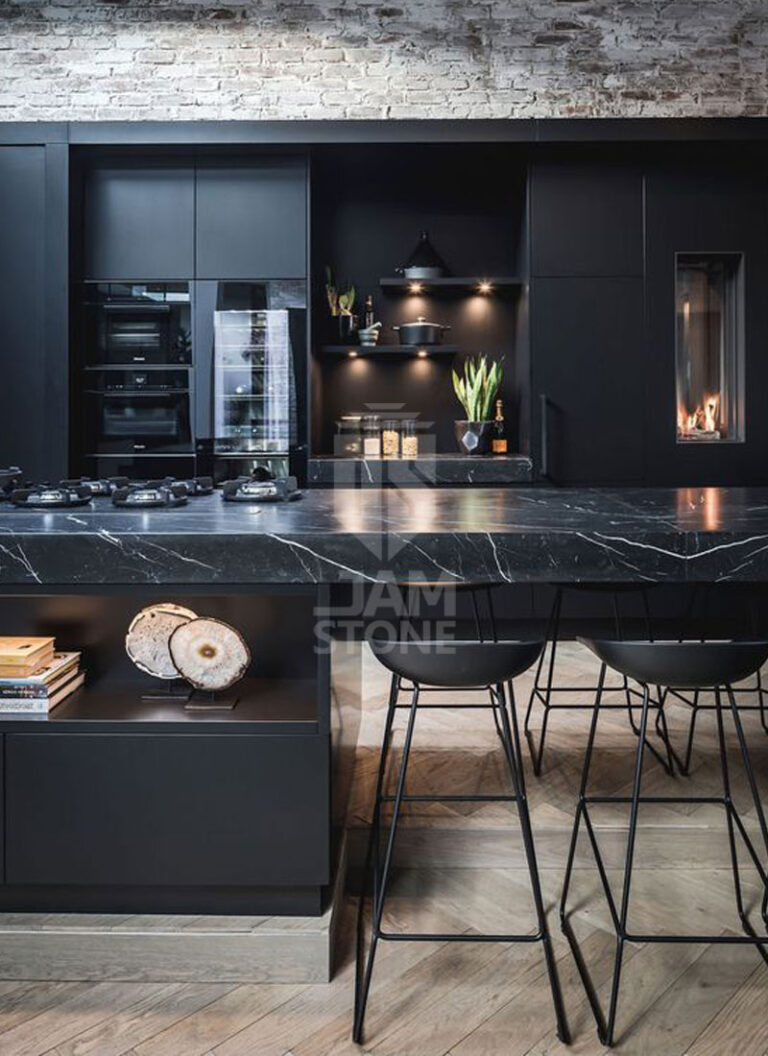
Jam Nero Marquina Marble fits interior wall cladding, elevator surrounds, bathroom walls, vanities, reception desks, and floors that see controlled foot traffic. The look remains strong and coherent when slabs are planned for bookmatching or for vein continuation across joints. In kitchens, the stone can perform if sealed and cared for, though acidic spills will still etch; trays and coasters help. Exterior cladding is a case-by-case choice that requires engineering for thickness, anchoring, and environmental exposure. Match finish and jointing to service conditions, and verify tolerances before release to avoid site-level adjustments.
Rather than quoting a fixed figure, plan around the factors that shape total cost. Visual grade is the first driver: deeper black fields with calm, elegant veins are rarer and priced higher. Large, regular blocks improve slab yield and reduce waste. Processing quality matters because stable resin work and flat calibration speed installation. Size, thickness, custom cutting, and special textures add labor. Logistics—crating, container optimization, and distance—change landed price. Request current slab photos, maps, and thickness reports before setting a budget, so design goals and supply realities stay aligned.
Higher grades show deeper, more uniform black fields and controlled, elegant veining with limited inclusions or seams. These lots are scarcer and demand tighter selection at the factory, raising cost. Economical grades may include busier veining, minor stylolites, or pinholes, delivering a different visual character that can still perform well in many settings.
Larger, straighter blocks produce longer slabs and wider clear areas, which improve cut plans and reduce off-cuts. Irregular or shorter blocks create more joints and waste. Vein direction and bench structure also affect nesting. Better yield typically lowers unit cost per square meter for common modules and large coordinated panels.
Advanced resin lines, precise calibration, and consistent polishing deliver flatter, brighter slabs with fewer micro-defects. Tight thickness tolerances reduce lippage and site rework, saving labor. Lower-spec processing can leave micro-pitting or gloss variation that requires more on-site adjustment, affecting both schedule and the predictability of finished results.
Polished finishes require even gloss and careful resin work, while honed and brushed textures mask small variation but add steps. Oversize panels, thick sections, miters, and waterjet inlays increase handling and fabrication time. Sticking to standard thicknesses and modules can control cost and shorten lead times without reducing visual impact.
Crating method, container space, route, and distance to port influence the final figure. Availability depends on quarry output and the stock of specific vein looks at the time of order. Consolidating mixed sizes or finishes into well-planned crates can improve logistics efficiency and reduce breakage risk during international transport.
Blocks are extracted from selected benches, squared, and graded for color depth, vein movement, and internal soundness. After trimming, they move to gangsaws for controlled slicing into slabs. Each slab then enters resin treatment and, where needed, receives mesh backing to stabilize hairline features. Calibration and finishing follow, delivering polished, honed, or brushed textures. Throughout, technicians track batch numbers and confirm thickness tolerance. Early sharing of slab photos and vein maps lets design teams position panels and plan bookmatched areas before any cutting begins.
Quality checks verify flatness, gloss uniformity, and the soundness of any repairs across the lot. Approved slabs proceed to cutting plans—tiles, large wall panels, stair sets, and custom elements shaped by CNC or waterjet. Packing uses foam interleaves, corner protectors, and moisture-resistant wraps inside ISPM-15 wooden crates or A-frames. Each crate carries labels for product code, finish, thickness, count, and batch for traceability. Loads are container-optimized, photographed, and documented with packing lists so receiving teams can reconcile deliveries quickly and start installation without confusion.
Set tiles with a deformable C2TE S1 adhesive on clean, flat substrates and follow the movement-joint plan closely. Keep grout joints narrow and regular—often two to three millimeters—so lines remain straight across rooms. Seal the surface after installation, then re-seal on a sensible schedule that reflects traffic and cleaning habits. In high-use zones, shorter cycles help preserve color depth and clarity. For wet areas, match texture and sealer to the expected exposure, and check that ventilation keeps moisture from lingering behind large panels.
For daily care, use only pH-neutral cleaners with soft pads, and remove grit at entries using mats. Avoid acidic products like vinegar or lemon cleaners and strong alkalis that can haze the finish. Wipe spills promptly to limit etching on polished areas. Place coasters under drinks and trays under bottles in kitchens or bars. If parts of the surface dull or show fine scratching, professional honing and repolishing can restore gloss. Document the maintenance plan so staff repeat the same steps and keep the stone looking consistent across seasons.
JAM Stone Co. operates integrated lines that support reliable sourcing, careful processing, and precise delivery for design teams. Inspectors grade slabs for black field purity, vein density, flatness, and edge integrity, then align slab maps with drawings. Factory services include waterjet, CNC profiling, and tight calibration to keep installation predictable. Technical notes, photos, and packaging details arrive early, so crews plan tools and sequences with confidence. As a supplier of Jam Nero Marquina Marble, the company focuses on consistent batches, practical tolerances, and on-time dispatch for both standard and bespoke orders.
International projects need clean documentation and dependable shipping. JAM Stone Co. prepares crate labels, packing lists, and pre-shipment photos to simplify receiving and quality checks on site. Crates and A-frames follow ISPM-15 standards, and loads are optimized to lower breakage risk. The logistics team works across GCC, European, and East Asian routes and supports mixed-finish or mixed-size orders when useful. As an exporter of Jam Nero Marquina Marble, they balance cost and transit time while keeping traceability clear, so teams match delivered pieces to drawings during installation.
Design intent often depends on predictable vein movement and the ability to secure matching slabs across phases. JAM Stone Co. achieves this through direct quarry partnerships and careful block selection, focusing on deep black fields and controlled white veining. They share current slab photos, maps, and thickness reports before cutting begins, reducing surprises later. Where projects require large spans or specific tones, they coordinate alternative partner benches with comparable visuals. As a provider of Jam Nero Marquina Marble, they prioritize look continuity, measured tolerances, and steady communication from inquiry to final delivery.
Finished pieces are protected with foam interleaves, corner guards, and moisture-resistant wraps inside sturdy ISPM-15 wooden crates or steel A-frames. Each crate lists product code, finish, thickness, piece count, and batch for quick reconciliation. Photos of packed crates are supplied before shipment, alongside packing lists and loading plans. Container space is optimized to lower costs and minimize movement during transit. Clear labels, logical grouping by room or elevation, and color-coded stickers help site teams stage materials, shortening the path from delivery to installation and reducing handling damage.
also known as Pars Black Marble, features a striking black background adorned with irregular white veins, lending it a unique and timeless aesthetic.
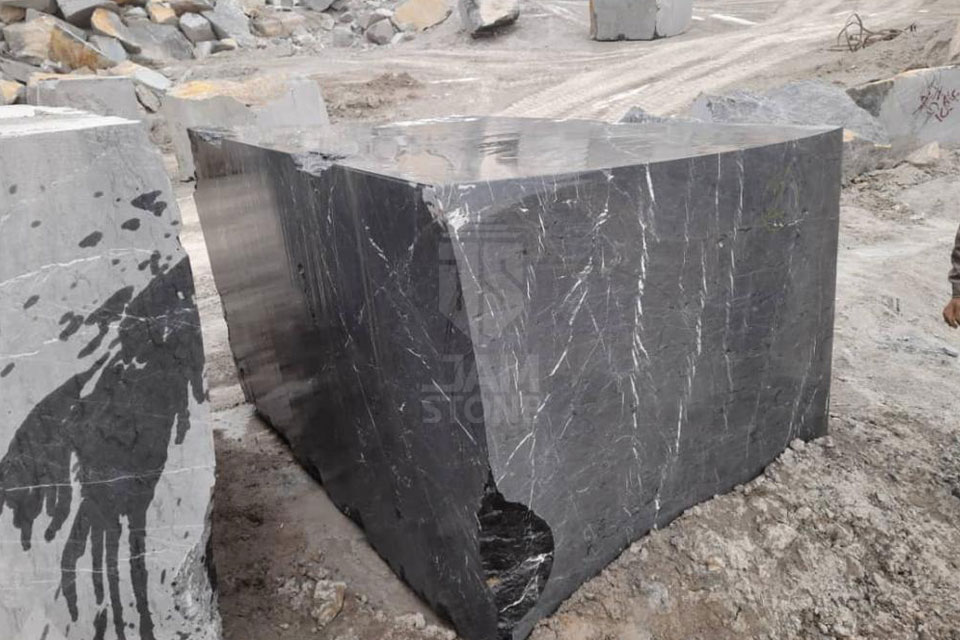
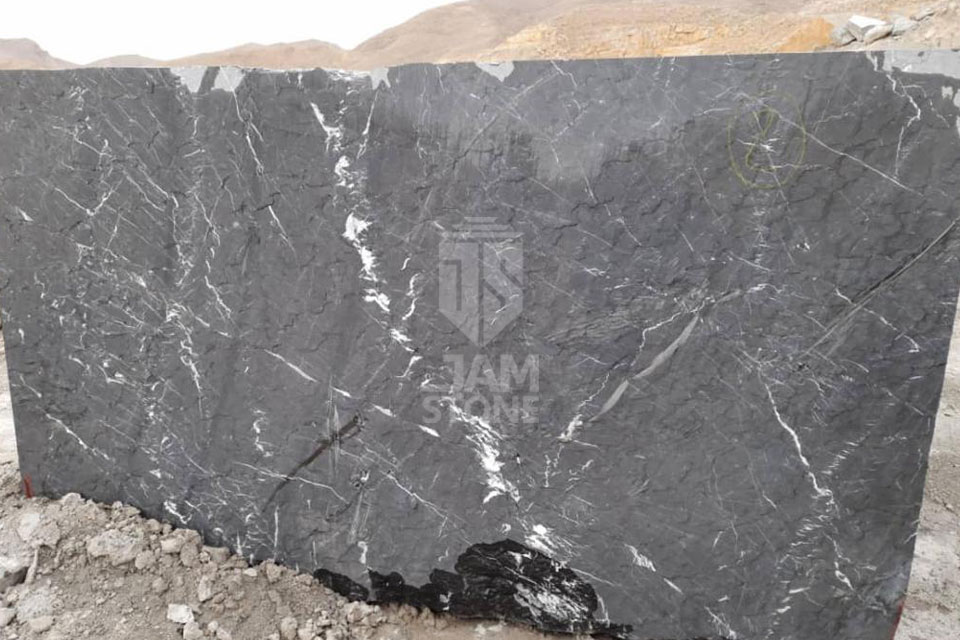
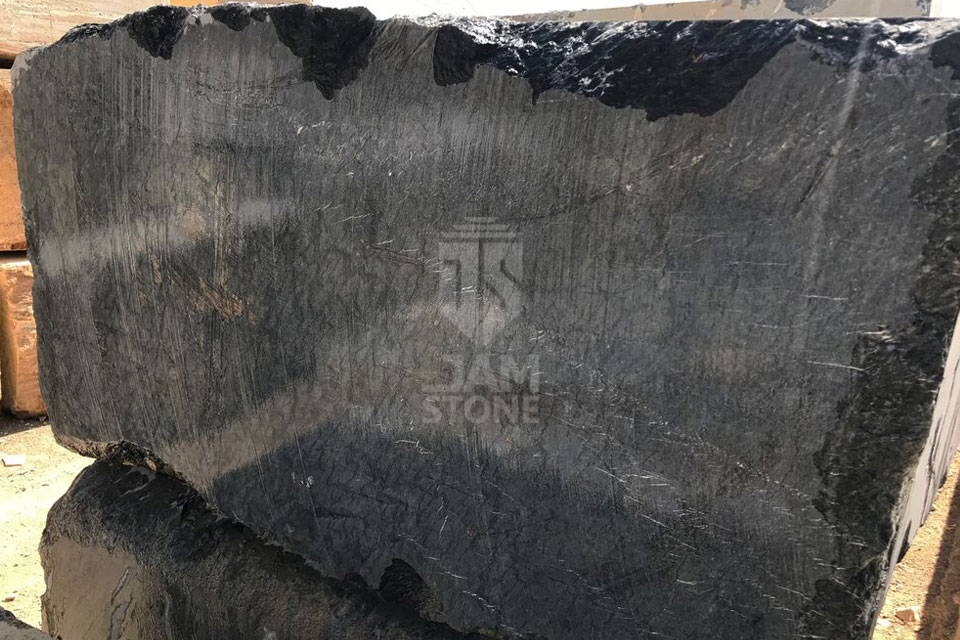
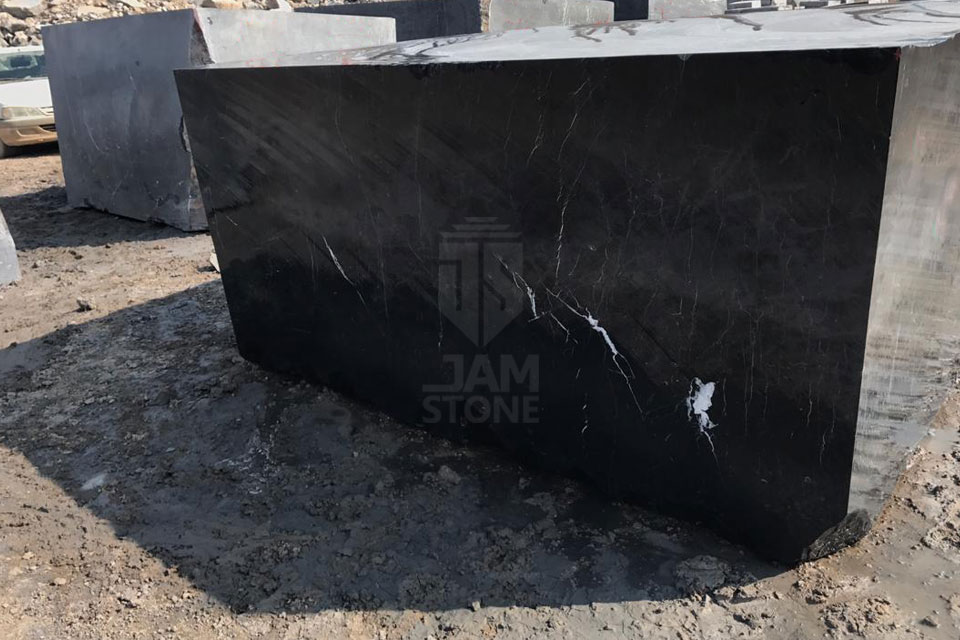
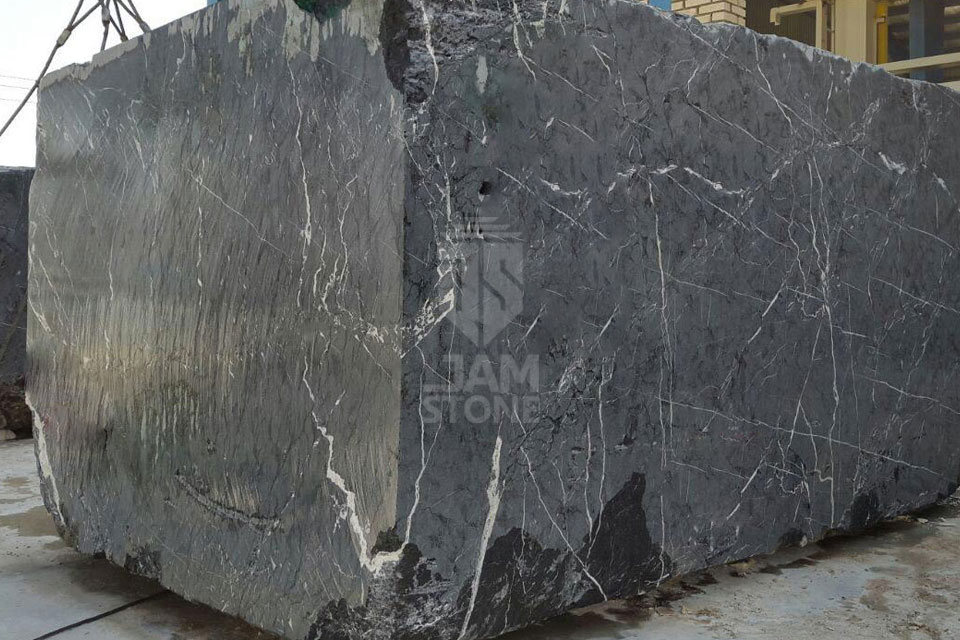
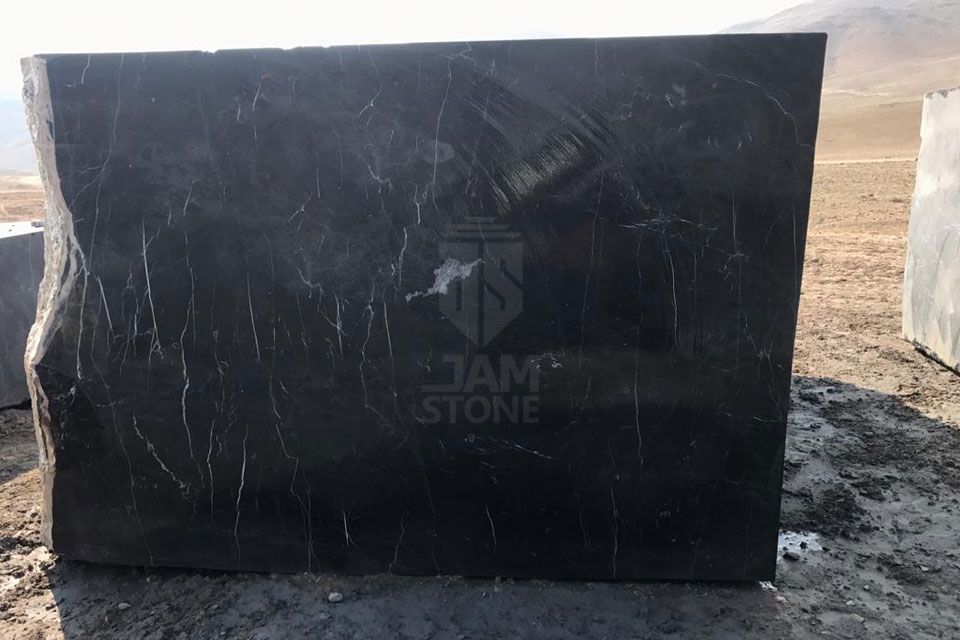
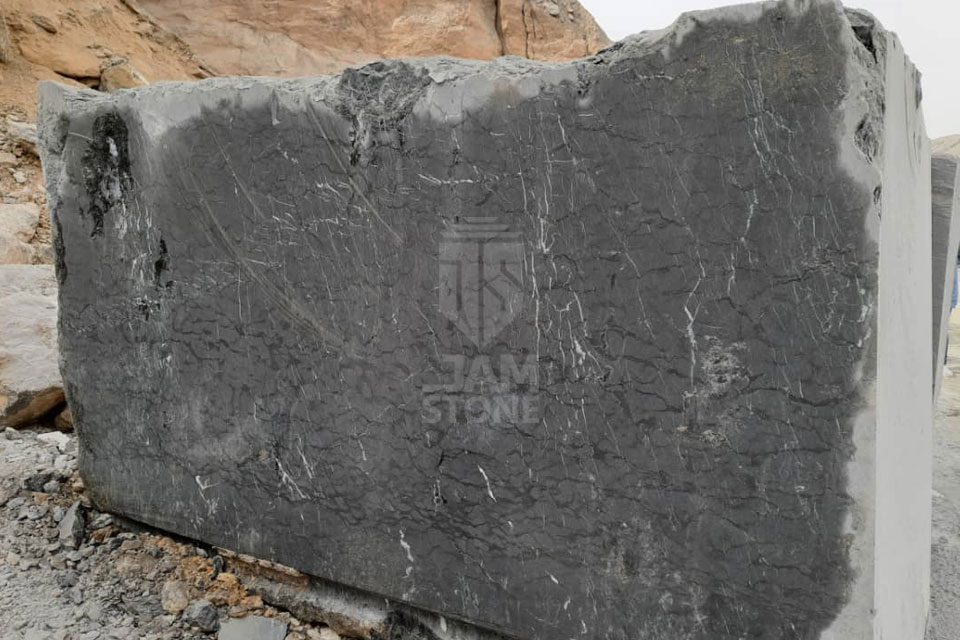
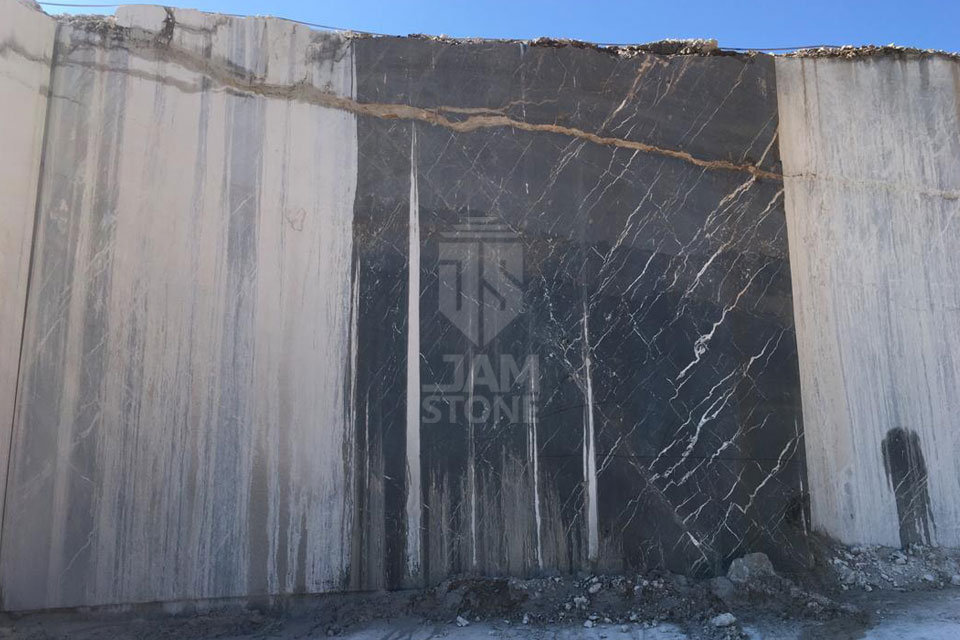
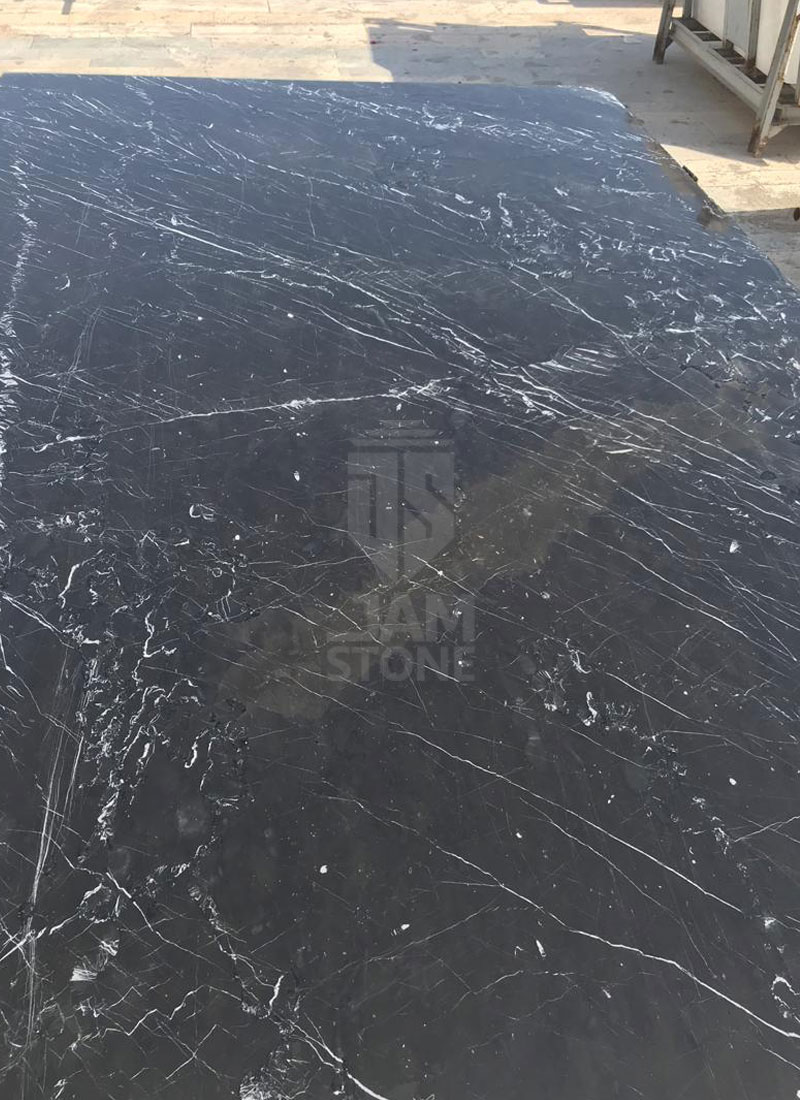

Jam Nero Marquina marble has gained traction in several international markets, including Australia, Bahrain, the United Arab Emirates (Emirates), Kuwait, Oman, and Canada. Renowned for its unique black color and distinctive features such as low water absorption, high density, and high polishability, Jam Nero Marquina marble appeals to buyers seeking premium building materials for architectural and interior design projects.